Step-by-Step Guide
Step 1: Start at the Official Store
Always begin on the Decoder Ring store linked from their show notes or social media bios. As of 2026, the official storefront is the only guaranteed source for authentic merch. Third-party sites like Amazon or eBay can have genuine items, but they also carry counterfeits. The official store uses a Shopify theme with a custom domain that includes "decoderring" in the URL - not a variation like "decoder-ring-shop" or "drmerch."
Pro tip: Bookmark the official domain. I keep mine pinned in my browser because typosquatting is common - last year fans reported a site at "decoderringmerch.shop" that looked nearly identical.
Step 2: Inspect the Tag - It Tells the Story
Real Decoder Ring tees have a woven neck tag with the show's logo and a small "RN" number indicating a U.S. manufacturer. Counterfeits often skip this or use a cheap printed tag that fades after a few washes. The tag should be soft, not scratchy, and the font should match the official branding - a clean sans-serif that matches the logo on the site.
Common mistake: Relying only on the logo on the front. Fakes can replicate that, but they rarely get the tag right.
Step 3: Feel the Fabric Weight
Decoder Ring's 2026 heavyweight
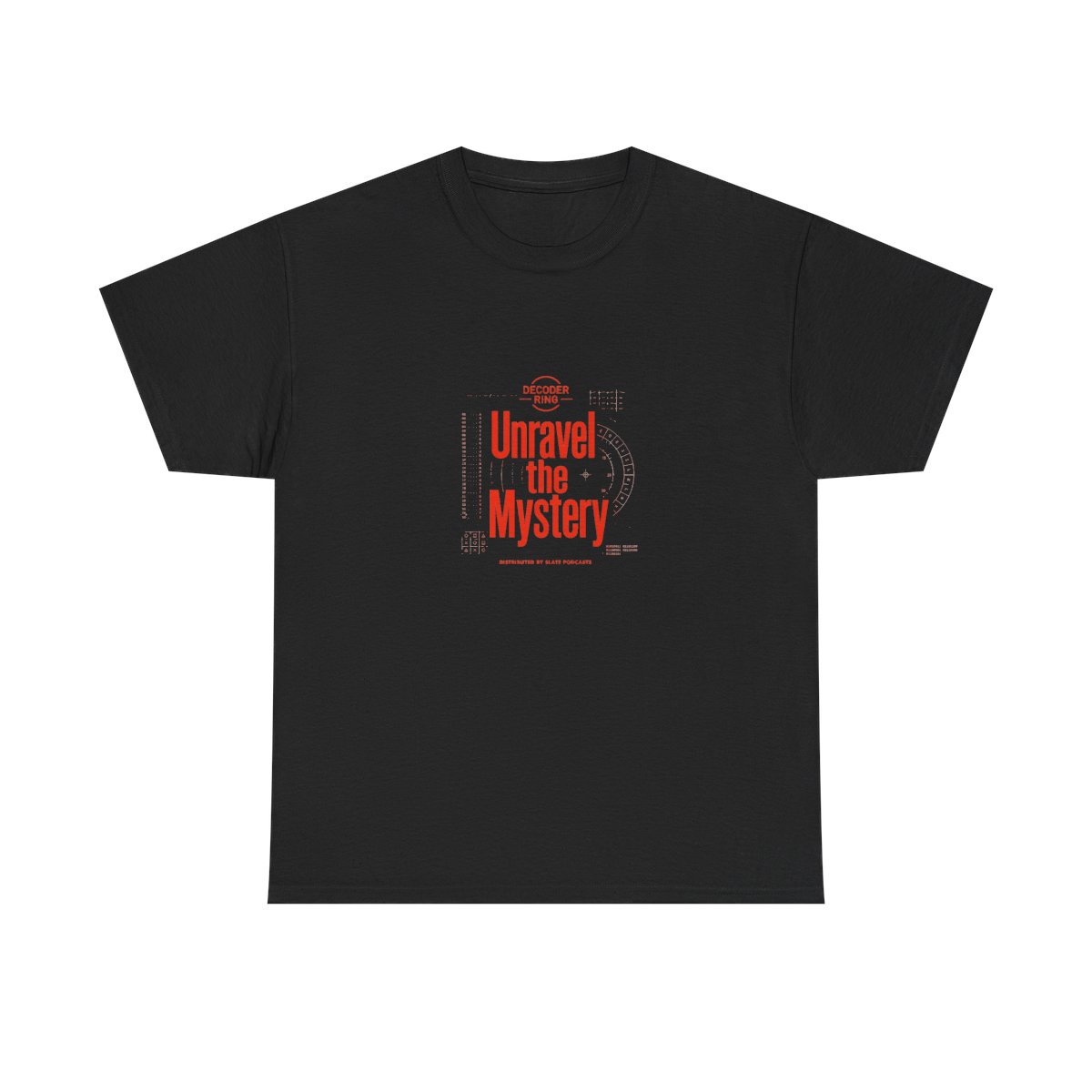
decoder ring merch store tee-decoder-ring-unravel-the-mystery-unisex-tee) is 6.5 ounces per square yard - that's substantial, not flimsy. A genuine tee should feel sturdy without being stiff. Knit structure is tight; you shouldn't see light through the fabric. Counterfeits often use lighter 4.5 oz cotton that feels thin and pills quickly.
Pro tip: Compare against my favorite product - the Heavyweight Tee. I own three and they've held up through 20+ washes with zero shrinkage or fading.
Step 4: Examine the Print
Authentic prints are screen-printed with soft water-based ink that sinks into the fabric. The graphic should feel smooth, not plasticky. In 2026, the official store uses a high-density opaque white for their signature cassette design - it covers fully but breathes. Fakes often use cheaper plastisol ink that cracks and feels raised.
Do the stretch test: Gently pull the fabric near the print. If the ink cracks or separates, it's likely fake. Real prints flex without damage.
Step 5: Check the Price
If a deal seems too good to be true, it is. Official tees run $32-$36. A $15 tee from a reseller is almost certainly counterfeit. Conversely, prices above $50 for a standard tee are likely scalpers. Use price as a red flag indicator.
Step 6: Verify via Customer Support
Still unsure? Use the contact form on the official store. Include photos of the tag, print, and packaging. The team typically responds within 24 hours with a confirmation. In my experience, they're helpful and appreciate fans checking.